Archive for May, 2009
Friday, May 29th, 2009
 Amsterdam's Brouwerij ‘t Ij offers free tours on Fridays. Photos by Audrey Sykes.
By Audrey Sykes in Amsterdam—
Amsterdam’s “Brouwerij ‘t Ij” brewery has been serving up a selection of Belgian-style organic brews since 1985. Located in an eastern corner of the city, the brewery is worth the trip for those seeking flavorful, fresh beer at a surprisingly low cost.
Plus, if you swing by Brouwerij ‘t Ij on Fridays, you can take a free guided tour!
History a-brewin’
The Brouwerij ‘t Ij stands beside an enormous, classic Dutch windmill once used for grinding oats. (Now a private residence, the windmill serves as a helpful landmark for those looking for the brewery.) As for the brewery, it was once a large bathhouse, yet the only remains of its soapy past are the old tiled walls inside.
The brewery was founded by Kasper Peterson, a Dutch citizen who spent years as a “beer engineer” in Belgium. Peterson’s first beer creation was the floral, blonde tripel named Zatte, a Dutch term for being “a bit drunk” — and still available on tap.
While the Brouwerij ‘t Ij’s logo is a humorous cartoon ostrich standing in a desert with a windmill in the background, the name “Brouwerij ‘t Ij” literally translates to “brewery on the Ij” due to its location near the Ij River.
The brewery produces only about 200,000 liters per year, a small amount compared to Heineken’s massive 220 million liters.
Cozy and beer buzzy
An assortment of beer enthusiasts flock to the “‘t Ij” brewery on sunny, warm weekends to sample the beers, snack away, and chill out. Tourists, locals, and families brew up a chatty environment, and the staff is a friendly bunch of connoisseurs who honestly enjoy their job. It’s a relaxed and pleasing setting for even the quietest of introverts: everyone has a new best friend after a few rounds at Brouwerij ‘t Ij.
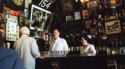
Inside, the decor includes a sizable collection of beer bottles from around the world. Old photos of windmills, ostriches, random faces, and news clippings are pinned above the beer-logged tables. (There will never be enough coasters to keep the counters clean, so stay outside if you can’t handle the scent of stale beer!)
A pure and simple beer recipe
Regardless of beer type, the Brouwerij ‘t Ij’s recipes strictly adhere to just three organic ingredients: water, hops, and malted barley. Yeast acts as a natural preservative and filtering system, making additives unnecessary, and giving the beer a cloudy, smooth, and frothy body.
Following the introduction of “Zatte,” Brouwerij ‘t Ij has added six Belgian-style beers available on tap year-round, plus a few seasonal specials. The list includes:
 So many choices...
Plzen: A light Czech pilsner. Cost: €1.90. (ABV: 5%)
Natte: Dubbel and mildly bitter. Cost: €2.20. (ABV: 6.5%)
Ijwit: Citrusy wheat beer. Cost: €2.20. (ABV: 7%)
Zatte: Tripel with a floral aroma. Cost: €2.20. (ABV: 8%)
Columbus: Bittersweet amber. Cost: €2.40. (ABV: 9%)
Struis: Dark stout-like ale. Cost: €2.70. (ABV: 9%)
The Brouwerij ‘t Ij will be interesting to anyone who considers themselves a beer devotee. It will be enjoyed by anyone who wants to sample the Dutch tradition of sipping something bubbly while relaxing in the sun with friends.
Free tours every Friday
Guided tours revealing the ins and outs of the brewery are offered for free on Fridays by the current brewmaster. Tours start at 4 PM.
And don’t worry–you won’t go hungry. Trappist cheeses dipped in beer, sliced salami meats, and local sheep cheeses are a few of the snacks served while sipping the aromatic brews.
Brouwerij ‘t Ij
Funenkade 7
Transportation: Tram 10 and 14
Phone +(31)(0) 20 6228325
Open daily: 3 PM – 8 PM
More information is available on the brewery’s website.
Also consider:
Heineken Experience (The Official Tour)
Stadhouderskade 78
Trams: 7, 10, 16, 24 and 25
Phone +(31)(0) 20 5239222
Hours: 11 AM – 7 PM, daily
Tour prices: €15 (no discounts given, except for groups, in advance)
Website: www.heinekenexperience.com
Popularity: 11% [?]
Posted in Amsterdam, Bars, Food, Free Stuff, Netherlands | 2 Comments »
Thursday, May 28th, 2009
 Typical fare at Buenas Migas Focacceria; photo by Ian Kershaw
By Regina W. Bryan in Barcelona—
If you’re a foodie, Barcelona can get spendy. To add insult to injury, it also has the unfortunate reputation of offering overpriced, mediocre meals. While there are some fantastic Michelin starred restaurants in the city, Cheapos in need of good grub require other options.
No te preocupes (Don’t worry!). Here are five cheap eats that will ensure a full belly, and plenty of extra pocket change for all those Gaudi postcards you’ll send back home. They may not be glamorous, but their fare is tasty and oh so inexpensive.
1. Woki
Asturies, 22
Gracia
One of my all-time-favorites, Woki is located in the vibrant Gracia neighborhood, but also benefits from two other locations, one on the beach in Barceloneta and another in Borne (Carders, 6).
Simply select a noodle or rice base for €4 and then add ingredients (starting at €1.30 each). Finally, choose a free sauce, which can be anything from Thai, Hoi Sin or the “House Sauce.”
Hand in your order and the Woki team throws it all together on an enormous wok right in front of you. Since there’s limited seating at Woki, I usually get my noodles to-go, often eating them right out of the box while watching the tide come in.
2. Tallers 76
Calle Tallers, 76bis
Right in the middle of the city and on trendy Calle Tallers, this lavender-colored café and restaurant is a right-on choice for sandwiches. Made with artisan breads, sandwiches come in delectable combos like goat cheese with sun-dried tomato and smoked salmon with cucumber.
Hey, it’s a no-frills lunch, but tasty and under €6.00, though plan to spend a bit more if you purchase a drink or side.
3. Buenas Migas
Passeig de Gracia (with locations citywide)
 Cheap delights are on every corner in Barcelona.
With multiple spots around town, Buenas Migas is an easy-to-find—and yummy—Cheapo option. Choose from focaccia pizzas, ample salads, plus an array of sandwiches and pastries.
A focaccia pizza will run you between €4 and €5 (flavors include ‘meat-lovers’, tomato and basil, and four-cheese). Add a drink with your focaccia and you’ll have a delicious midday feast for around €6!
4. La Central
Calle Mallorca, 237 (with locations citywide)
Not everything offered on the menu at La Central—an eatery within a bookshop—falls under the budget category. However, during the lunch rush, they do offer reasonably priced deli wraps, sandwiches, and some pasta salads. All items range from €6 and up.
But, the real reason I love La Central is for their coffee and ambiance. The place benefits by being one of the city’s most eclectic book stores right in the heart of an old neighborhood. Grab a cup o’ joe, take a seat, and browse the wares.
5. Pans & Company
Plaça urquinaona, 12-13 (with locations nationwide)
In a way I hate to mention Pans & Company because, well, it’s a chain. However, it is also very cheap and the quality and quantities here is pretty good. Not unlike the U.S.-based Subway sandwiches, Pans is fast-food in style, but takes a healthy approach to eating.
 Outdoor seating at Pans & Company; photo by Enric Archivell
The sandwiches and sides offered at Pans are geared towards the classic Mediterranean eater, with combos like melted brie and Spanish ham, or tuna and olives. They also serve large salads and occasionally offer hamburgers.
All sandwiches are under €6 and depending on what you order you will likely have a euro or two leftover to grab a drink, side, or opt for a meal combo (around €6 or €7.00). Pans also has an espresso bar that offers cheap, good coffee and tasty pastries and breads.
About the author: Regina W. Bryan is a Barcelona-based freelance writer and photographer. When not eating tapas and exploring Europe, she is tending her balcony veggie garden and practicing Catalan. For more of her thoughts on Spain, check: www.regwb.com and www.thespainscoop.com.
Popularity: 18% [?]
Posted in Barcelona, Food, Spain | 7 Comments »
Wednesday, May 27th, 2009
By Theadora Brack in Paris—
 Studio 28 in Paris. Photo by Theadora Brack.
When the sun sets in Paris, what’s an insomniac Cheapo to do? Why not take in a film? After all, cinema is as French as camembert cheese.
With almost 400 theaters in Paris showing 600 films on any given day, choosing just one film can be daunting.
First things first: Get your hands on a Pariscope, the weekly entertainment guide available at any newsstand, or visit Allocine.com. (In cinema listings, “v.f.” stands for “version francaise,” meaning it’s dubbed in French with no subtitles. “V.o.” is “version originale,” which means the film is presented in its original language with subtitles in French.)
Spotlight on… Studio 28
My own favorite cinema is little Studio 28, the only movie house on the hill of Montmartre. With just 170 seats and about ten screenings a week, it has earned a special place in the Parisian filmscape.
Founded in 1928 (hence the name), it immediately carved a niche in history as the world’s first avant-garde art theater. Studio 28’s fame was secured when Salvador Dali and Luis Buñuel premiered one of the first surrealist films there: “L’Age d’Or” (The Golden Age).
Before you go
 Amelie at Studio 28; Photo courtesy of Miramax
Today, Studio 28 provides a delightful experience while remaining relatively inexpensive, compared to other Paris movie theatres. During July, it offers a special reduced-fare series featuring international classics like “Rebel Without a Cause”, “East of Eden”, “Roman Holiday”, and “Double Indemnity”, among others.
The cinema offers a rare opportunity to experience films the way they were before the multiplex—it’s no wonder that Audrey Tautou’s “Amélie Poulain” headed to Studio 28 every Friday.
Also to note: Studio 28 maintains a rotating display of artwork, and showcases the hand- and footprints of famous actors and directors who have premiered films there.
A bar at the end of the lobby opens onto a small beer garden (enclosed in winter) where you can sit and have a drink or some snacks before the show. Once you’ve entered the auditorium, settle into your plush red seat, let your eyes adjust to the dark, and make sure you check out the old piano nearby. It last saw serious use when Charlie Chaplin showed his movies here. The large set of surrealist light fixtures in the same auditorium were created by artist/film director Jean Cocteau.
Practical info: Studio 28 is located at 10 rue Tholozé in the 18th arrondissement (Metros Abbesses or Blanche). Phone: 01 46 06 36 07, or check online for current listings. Tickets are usually €7.50 (students €6.30)
Other cinemas of note
La Pagode (57, rue de Babylone, 7th arrondissement), looks like a Japanese temple. It was built for the wife of the founder of Au Bon Marché, the oldest department store in the city.
Le Balzac (just off the Champs-Elysées at 1, rue Balzac) will make you feel like you’re on a steamship bound for a distant land, thanks to its porthole-and-riveted-steel-hatchways ocean liner decor.
At La Péniche Cinéma that particular aesthetic is carried even further, as the theater actually is a ship—well, a barge, anyway—docked at Parc de la Villette each winter, and then moored at La Villette canal basin all summer.
Le Grand Rex is by far the city’s largest and flashiest theater. Located at 1, boulevard Poissonnière (between Metros Grands Boulevards and Bonne Nouvelle), this humongous movie palace was erected in 1932 at the height of the Art Deco movement. It can seat audiences of 5,000.
Do you have a favorite Paris cinema? Tell us about it in the comment section below!
About the author: Theadora Brack is a writer working in Paris. Her fiction has appeared in more than 30 literary publications, including 3AM International, The Smoking Poet, Beloit Fiction Journal, Mid-American Review, and the Haight-Ashbury Literary Journal.
Popularity: 9% [?]
Posted in Art, Cheapo night out, France, Nightlife, On Screen, Paris | 3 Comments »
Wednesday, May 27th, 2009
Pardon the interruption to our regularly scheduled “Daily Cheapo” programming, but we have an exciting announcement: We’ve unveiled a new release of our budget hotel search engine and think you’re going to love it!
Our new search engine includes all the Cheapo “bells and whistles” we could dream up to help budget travelers find the best hotel. Here’s a short list of what’s in store:
More Cheapo-Filters
We’ve added all sorts of nifty filtering technology to help travelers easily narrow down search results. Now you can filter by proximity to popular landmarks, user ratings, neighborhood, room rate and property type.
Looking for a three-star hotel this summer in Paris, near Notre Dame with at least a 7.5 user rating for less than $200? We have several suggestions!
Trusted Travel Advice
Can’t decide where to stay? Our editors have inspected thousands of European hotels and provide recommendations in 28 popular cities. Read editor reviews and check out our candid hotel photos. Need help choosing the right neighborhood? Roll over neighborhood names to read detailed descriptions.
What’s Your “CheapoFactor?”
Our search results rank budget hotels by their “CheapoFactor,” the site’s super top-secret algorithm that pushes the most interesting, central, highest rated, and lowest priced hotels to the top. Check out the creme de la (cheapo) crème!
Handpicked Hotel Listings
Our editors select every hotel that shows up in our search results. To be included, hotels must be central, have satisfactory user reviews, and always have budget-friendly prices. We don’t let just any hotel show up!
Hotel Price Comparison
Our search engine compares hotel rates from multipile reservation websites, allowing travelers to easily find — and book — the lowest rate out there.
Tell Us What You Think!
We’re proud of our budget hotel search engine and always want it to be as helpful as possible. So try it out and tell us what you think. What are we missing? Leave a comment below and let us know your thoughts, Cheapos!
Popularity: 6% [?]
Posted in Budget Deals, Cheap Hotels, CheapoNews, Cheapos at work, News, technology | 2 Comments »
Tuesday, May 26th, 2009
Yes, Cheapos, we finally two winners to our recent “Carrie Bradshaw in Paris” contest. We asked the following question:
During the season six finale:
1) Where in Paris did Carrie Bradshaw fall?
2) What color was her umbrella?
and (for existential bonus points)…
3) What exactly did she lose during her spill?
Congratulations Arte and Christina! You both provided the correct answers to all three questions, including the existential bonus-studded “stumper.”
The answers you’ve been waiting for…
During the season six finale, one homesick Carrie (personally, I don’t think she gave Paris a fair shot!) slipped and fell in a Dior shop after closing her very wet (but still very chic) red umbrella.
And what did Carrie “lose” during the spill, at least temporarily?
Carrie momentarily misplaced her beloved “Carrie” necklace, which symbolized her sense of self (a shiny meld of self-identity, confidence, and balance).
And what do we have for our winners today? A very stylish Rihanna ‘Brella (umbrella) by Totes!
Thanks for playing everyone!
See also: Our post about packing an umbrella in Paris, for when it drizzles…
Popularity: 6% [?]
Posted in Contest, Entertainment, France, On Screen, Paris, fun | 2 Comments »
Friday, May 22nd, 2009
By Sav D’Souza in Rome—
Rome is the Eternal City, and like other hot spots around the globe, the nightlife is pretty eternally available here too.
Next time you’re in Rome, why not check out some late night live music? Whether you prefer mellow jazz as background noise or a wild scene (mosh pit anyone?), here are a few of my suggestions.
The Nags Head
Via 4 Novembre, 138
Getting there: Near Piazza Venezia
 Photo by Sav D'Souza
A variety of different acts at The Nags Head bellow out everything from Motown classics to hard rock. The place, a faux ‘Scottish pub,’ typically attracts a friendly and fun crowd.
Nightly music offerings change from week to week, though concerts usually occur from Tuesday through Thursday and occasionally on the odd Friday. Live acts start up around 8 or 9 PM and are followed by DJ sets, which go until a cool 4 AM.
Note: This place can get a little crowded and raucous. Get here early to ensure you have a spot to strut your stuff. Free entry.
Circolo degli Artisti
Via Casilina Vecchia 42 (Pigneto)
Getting there: Bus 81, 105, 412, 810/tram 5, 14, 19 .
Circolo degli Artisti is probably one of the best places in the city to catch original, quality live music. For example, you won’t see any cover bands haunting the rooms here where the emphasis is on an eclectic mix of original sounds—from hip hop to light pop—by up-and-coming bands.
I especially like this place for its huge open area outside, replete with bars; it’s the prefect chill out spot.
Cover charges for gigs run between 6 to 12€. The bar stays open from 9:30 PM to 3:30 AM Tuesday through Thursday; 9 PM to 4:30 AM on weekends. Closed throughout August.
Fun fact: The Kaiser Chiefs have played here.
Beba do Samba
Via dei Messapi 8 (San Lorenzo)
Getting there: Buses from Porta Maggiore; trams 3, 19
With a name like “Beba do Samba,” this club delivers the funky Brazilian Latin vibe you might expect. Live music acts happen on most nights of the week. The bar specializes in rum-based cocktails like Mojitos and Cuba Libres, though the Caipirinhas are my favorite. DJs keep the samba beats alive late into the night.
Cost: 5€ for a one-year membership. The club is open from 10 PM to 2 AM daily. Closed July and August.
Jazz Café
12 Via Giuseppe Zanardelli
Getting there: Near Pizza Navona
 Photo by Sav D'Souza
For a less raucous night, try the Jazz Café, one of the most popular, and unique places to take in a little live jazz and blues in Rome. Knock back a few cocktails from the impressive drinks menu or enjoy a top-notch meal in the pleasant seating area outside. It’s open Tuesday to Thursday around 10 PM on. Entry is free. Friday and Saturday nights DJs play pop hits after the live shows.
About the author: Sav D’Souza is a freelance journalist currently based in Rome. He has worked as a journalist in Hawaii, Prague, and London and contributed features to the Guardian, Daily Telegraph, SA Sports Illustrated, Prague Post and CNBC Europe. He is a demon pool player, enjoys a round of golf, playing poker, and the occasional gin and tonic.
Popularity: 9% [?]
Posted in Cheapo night out, Entertainment, Italy, Nightlife, Rome, music | 2 Comments »
Thursday, May 21st, 2009
 The Museum of the Occupation of Latvia.
Riga, the capital of Latvia, has no shortage of interesting sights and activities to offer budget travelers. For example, the city’s fine State Art Museum will only set you back a couple of lats, while the lift to the top of St. Peter’s Church, towering over Old Town, will cost about the same.
The following two museums, however, are completely free and should make your must-visit list:
Latvian War Museum
Located inside Gunpowder Tower at Smilsu iela, 20
For a quick-hit history of Latvia’s military past, and to catch an illuminating exhibit on the Soviet occupation, check out Latvia’s War Museum. The museum describes its mission as “to save collective, historical memory of the nation about political and military history of Latvia, the influence of the military conflicts… on the destiny of the nation, and the reflection of these conflicts’ consequences…”
Current offerings include a detailed exposition on the Latvian army’s role in Russia’s Civil War (1918-1921).
The museum is open year-round, and is closed on Mondays and Tuesdays.
The Museum of the Occupation of Latvia
Strelnieku laukums, 1, Old Town
Latvia was occupied by German and Soviet forces three times from 1940 to 1991. These included the first Soviet occupation (1940-1941), the Nazi occupation (1941-1944/45), and the long, devastating second Soviet occupation (1944/45-1991).
The Museum of the Occupation of Latvia provides exhibits and a permanent collection focused on these three occupations, their victims (including business and farm owners, Jews, political opponents, and artists), and the crimes committed by the foreign powers.
The museum is centrally located in Old Town, next to Town Hall Square (Ratslaukums). The museum is open daily May through September, 11 AM to 6 PM; October through April 11 AM to 5 PM, closed Mondays during this off-season. (The Museum of the Occupation of Latvia was also the answer to our previous “Name this Museum” post.)
Tell us: Have you ever been to either of these museums? Do you have a favorite free or budget sight in Riga?
Popularity: 10% [?]
Posted in Free Stuff, Latvia, Museums, Riga | No Comments »
Wednesday, May 20th, 2009
 Genoa's old harbour. Photo by hidden europe.
By Nicky Gardner and Susanne Kries in Berlin—
Arriving at one of Europe’s great port cities other than by boat is a travel no-no. The planners who oversaw the growth of great ports such as Cádiz or Constanta, Venice or Genoa assumed that visitors, be they friend or foe, would naturally arrive by sea.
Yet so many travellers today, in their pursuit of speed, choose back-door routes into ancient ports, and thus fail to get the right perspective on their chosen destination.
Venice: Arriving in style
That’s one of the reasons why we at hidden europe are so keen on the Alilaguna water bus services that connect Venice’s Marco Polo airport with the city centre. Our favorite Alilaguna run is the “blue route” which takes 80 minutes to reach San Marco from the airport, with stops along the way at the island of Murano and the Venice Lido. The final run into San Marco is exquisite, with superb views of the Isola di San Giorgio Maggiore and tantalising glimpses, up beyond the landing stage at San Marco, to the seaward end of the Canal Grande.
Genoa connections
Last week, we hopped along the coast of Liguria by boat, and much enjoyed the forty-minute run from Pegli into Genoa’s old port on a local ferry. This was not one of those posh tourist boats, but rather a humble municipal ferry run by local company AMT Genova.
Pegli is a nice enough spot, worth a visit in itself. The ferry from Pegli quay to Genoa leaves ten times each day (six times daily at weekends and public holidays), and is a great deal. A modest outlay of €1.20 (€2 if purchased on board) will get you an AMT Genova ticket valid on the company’s buses and boat services (and local trains, too) for 90 minutes. Enough to allow you to cruise from Pegli to Genoa and back again if you wish.
Ports for the future
True, if you have time and funds to spare, you could board one of the stylish Grandi Navi Veloci (GNV) ferries in Tunis or Tangier and a day or two later arrive at the modern ferry terminal west of Genoa’s city centre. But the AMT ship, called the “Onda Azzurra,” outsmarts the GNV long distance ferries by sailing right into the very heart of Genoa’s old port. On the way over from Pegli, you’ll see thousands of cranes, skirt the wharves of a busy working port, and then gaze on Genoa at its best—a fabulous medley of palazzi and churches rising in tiers behind the old port.
It would be sheer perfection, had not traffic planners in the mid-sixties constructed an elevated highway that skirts the waterfront, so creating an eyesore that unhappily severs the visual link between the old port and the ancient city it once served. The “Strada sopraelevata” is an environmental disaster, a travesty that mocks a once handsome port, but built at a time when city planners thought that ports were a mere relic of history.
The renaissance of the Porto Antico in Genoa over the last fifteen years shows just how wrong those planners were. Today the quaysides bustle as visitors queue to see one of Europe’s largest aquariums, locals throng waterfront bars and restaurants, and migrants from Senegal tout some of the strangest designer handbags and sunglasses that we’ve ever seen.
About the authors: Susanne Kries and Nicky Gardner are regular contributors to EuroCheapo and together edit hidden europe magazine.
Also see: Our recommended list of budget hotels in Venice.
Popularity: 11% [?]
Posted in Alternative Transportation, City Transportation, Europe, Italy, Venice, hidden europe, transportation | 5 Comments »
Tuesday, May 19th, 2009
 Lakes of fun at Bos campground. Photos by Audrey Sykes.
By Audrey Sykes in Amsterdam—
Travelers who prefer a tent to a hotel room are in luck when visiting green, camping-friendly Amsterdam. Cheap, clean, safe, and relaxing, the city’s campsites serve as a haven for those who wish to indulge in Amsterdam’s city life by day, but retreat to a peaceful, natural setting by night.
Here are my top four picks for pitching a tent in Amsterdam:
Camping Zeeburg
Zuider Ijdijk 20
+(31)(0) 20 6944430
email: info@campingseeburg.nl
website: www.campingzeeburg.nl
Situated just east of Amsterdam, Zeeburg (”Seacastle”) is unique for its beachy location on the nearby island of Ijmeer. Camping Zeeburg is open year-round and serves as a trailhead for a number of hike and bike routes.
Facilities: Supermarket (with fresh baked goods), sanitary facilities, bar, restaurant, washer/dryer facilities, phone booth, bike rental, canoe rental, pool, internet, night security, and BBQs allowed.
Perks: During the high season, the campsite offers a range of daily activities and excursions (including a trip to the petting zoo for the kiddies).
Cost: From €6.50 per person per night. Two, four and six-person furnished cabins are also available. Extra charge for parking.
To Amsterdam: Trams 14 and 26 run frequently and are a 10-15 minute ride from the campground to the heart of Amsterdam. Bus 22 runs during the day, and bus 359 runs at night. By bike it will take about 20 minutes to reach the city center.
 Ready to canoe at Bos Campground.
Camping Het Amsterdamse Bos
Kleine Noorddijk 1
+(31)(0) 20 6416868
email: info@campingamsterdamsebos.com
website: www.campingamsterdamsebos.com
Located inside Amsterdam’s largest protected park, Amsterdamse Bos sits peacefully within 900 acres of natural lakes, canals, and greenery just south of the city. Open year-round.
Facilities: Camping shop with fresh baked rolls, guest kitchen, dining room, lockers, washer, dryer, canoe rental, and BBQs allowed.
Perks: A natural playground for families, the park has unlimited recreational possibilities: canoe and kayak rentals, picnic areas, cafes, and even a woodsy section where buffalo roam!
Cost: From € 5 per person. A variety of cabins and hostel rooms are also available to rent. Parking is free.
To Amsterdam: Bus 172 and 171 runs daily to Amsterdam Central Station, and bus 271 runs through the night. Bus 199 heads from Schipol Airport directly to the campground. Metro 51 stops at Amstelveen, plus a 15-minute walk to the campsite. Biking from the city center takes about 30 minutes.
Vliegenbos
Meeuwenlaan 138
+(31)(0) 20 6368855
website: www.vliegenbos.com
Nestled between 62 acres of woodlands and small fishing harbors to the north of Amsterdam, Vliegenbos is a blend of parks and forests, just a stone’s throw away from the city center. The campsite is seasonal, open from early April through late September.
Facilities: Camping shop, sanitary facilities, lockers, dishwasher, bar, restaurant, washer/dryer, phone booth, bike rental, canoe rental, internet, night security, and BBQs allowed. No dogs.
Perks: Affordable “Dirk van de Broek” supermarket is a short walk away. Nearby parks offer tennis courts, swimming pool, sport fields, and more.
Cost: From €8.30 for a one-person tent. Extra charge for parking.
To Amsterdam: Bus 32 and 33 run daily and are direct to Central Station, and bus 361 runs through the night. By bike, a five-minute ride and a quick trip on the ferry will bring campers to the North end of Central Station.
Gaasper Camping
Loosdrechtdreef 7
+(31)(0) 20 6967326
website: www.gaaspercamping.nl
Located in southeast Amsterdam, Gaasper is Amsterdam’s largest campsite, offering more than 400 plots in scenic spots, including lakes, parks, and woods. Gaasper is open annually from March 15 to November 1.
Facilities: Supermarket, dishwasher, bar, restaurant, phone booth, night security, and BBQs allowed.
Perks: The restaurant provides a cafeteria-style food selection and outdoor terrace.
Cost: From € 5 per person. Parking fees apply.
To Amsterdam: Central Amsterdam is about 20 minutes away via public transportation. Bus 53 runs daily to Amsterdam’s Central Station, as well as Metro 53 and night buses 355 and 357 (weekends) to Gaasperplas Station. A bike ride to the center takes about 20 minutes.
Popularity: 13% [?]
Posted in Alternative Accommodations, Amsterdam, Netherlands | 3 Comments »
Monday, May 18th, 2009
 Notre Dame de Lorette and Sacre Coeur. Photos by Liz Webber.
By Liz Webber in Paris—
Thanks in part to the cult of the Virgin Mary that spread throughout France in the Middle Ages, there are some 40-odd churches, chapels and basilicas named “Notre Dame” in Paris. Everyone knows about the famous cathedral, but what about the other 41 églises?
We present you with five of the largest and most interesting “Autres” Dames de Paris, representing the diverse quartiers of the city.
The Basilique Notre Dames des Victoires
 Basilique Notre Dame des Victoires
One of two basilicas bearing the name “Our Lady” in Paris, you’ll find the Basilique Notre Dames des Victoires on the Place des Petit Pères in the 2nd Arrondissement. Construction began in 1629, financed by Louis XIII, who also gave the church its name. During the Revolution the Augustinian friars who lived there were expelled and Notre Dame des Victoires was converted into a stock market.
It reopened as a place of worship in 1809, but few congregants returned to the church. The local priest was about to call it quits in 1836 when he received a divine message telling him to reconsecrate the church to the “Immaculate Heart of the Very Saintly Virgin.” Soon, pilgrims were flocking to the site. The inside walls of the building are covered in plaques bearing the prayers of the faithful from around this time. Notre Dame des Victoires became a basilica in 1927.
Visiting: The building is open to the public 7:30 AM to 7:45 PM Monday through Saturday and 8:30 AM to 7:45 PM on Sunday.
 Notre Dame des Champs
Notre Dame des Champs
The first divine being to be worshiped at this site was Mercury, the Roman god of commerce. When the first Christians arrived in the Paris region, they rededicated the existing shrine to Mary under the name “Notre Dame des Vignes.” King Robert the Pious (996-1031) decided to rebuild the church, and around the same time the name was changed to “Notre Dame des Champs” because the vines (“vignes”) had been torn down.
The church enjoyed fame under the reign of Louis XIV, but unfortunately the building was destroyed during the Revolution. The first stone of the current church was laid in 1867, in 1876 the building was dedicated, and the archbishop of Paris oversaw the consecration in 1912.
Notre Dame des Champs borders the 6th and 14th Arrondissements at 92 bis Boulevard du Montparnasse. The spacious nave lets in quite a bit of light, even on rainy days. To take a full tour of the church, follow the stations of the cross beginning at the front on the left side, continuing around the back and up the other side.
Visiting: Opening hours are between 9 AM and 12:30 PM and 2 PM and 5:30 PM, except for Sunday when the church closes at 5 PM.
Notre Dame de Lorette
I must admit to being a bit partial to Notre Dame de Lorette because it’s in my neighborhood in the 9th Arrondissement, at 8 bis Rue de Châteaudun. If you stand far enough down the Rue Laffitte, directly across from the front entrance, there’s an amazing view of Notre Dame de Lorette with Sacré Coeur looming in the background (see photo, above).
With its elaborate Corinthian columns and imposing Latin transcription over the door, it’s not hard to see that the church was modeled after Roman basilicas. The neoclassic architect Hippolyte Lebas designed the building, which was constructed between 1823 and 1836. (You’ll find a street bearing the architect’s name not far here, just a ways up the Rue des Martyrs.)
Visiting: Notre Dame de Lorette is open Monday from 11 AM to 7:30 PM; Tuesday to Friday from 7:30 AM to 7:30 PM; Saturday from 9 AM to 12 PM and 2:30 PM to 7:30 PM; and Sunday 9 AM to 12:30 PM and 2:30 PM to 7 PM.
Notre Dame de Clignancourt
 Notre Dame de Clignancourt
The first stone of Notre Dame de Clignancourt was laid by the great civic planner Baron Haussmann in 1859, and it opened its doors in 1863. Eugenie, the wife of Napoleon III, endowed the church with furniture and objects of worship, much of which was plundered during the Paris Commune in 1870.
The interior of Notre Dame de Clignancourt is a bit dark, but it does have lovely modern stained-glass windows. The pretty chapel behind the altar is definitely worth a look. Located at 2 Place Jules Joffrin in the 18th Arrondissement, the church is directly opposite from the neighborhood’s mairie (town hall building), which is also an architectural gem.
Visiting: Notre Dame de Clignancourt is open from 9 AM to 12:30 PM and 2 PM to 7:30 PM, except on Sundays when it closes at 5:30 PM.
 Notre Dame de la Croix
Notre Dame de la Croix
Notre Dame de la Croix is by far the largest church on our list. The steeple is visible from blocks away over the roofs of the surrounding buildings. To fully appreciate the enormity of the structure, start at the far end of Rue Etienne Dolet and walk up to the main entrance at 3 Place de Ménilmontant (in the 20th Arrondissement).
Originally, a small chapel opening in 1847 served the Catholic community in this neighborhood. However, the chapel became too small, and construction began on the current church in 1863. The work was interrupted by the Commune, but was finally finished in 1880.
Notre Dame de la Croix gets its name from a statue owned by the monks of Sainte Croix de la Bretonnerie that was hidden in the Ménilmontant neighborhood during the Revolution. The statue was stolen in 1975 and then recovered, but was later stolen again and never returned.
Visiting: The church is open Monday through Saturday from 7 AM to 7:30 PM; on Thursday until 10 PM; and Sunday 7:30 AM to 7 PM.
Discover more Notre Dames
To visit even more of the churches named for the Virgin Mary, you can try looking them up on the websites for each arrondissement, which all follow the same formula (example: the website of the 5th is www.mairie5.paris.fr). Once there, search for “lieux de culte” in the “rechercher” box. Not all the websites list places of worship, but it’s a good starting place.
Do you know of any other intriguing Notre Dame that we might have missed? Tell us about it in the comments section!
Popularity: 8% [?]
Posted in City Guides, Destinations, France, Paris, churches | No Comments »
|
|
|